Rising Action: Celie is forced into a marriage that her father assigns her into, with a man who she refers to as Mr. _____. Mr. ______ marries Celie even though he is in love with a woman named Shug Avery (who is the mother of his 3 children), but sadly Shug is unfaithful to every man she gets in a relationship with and quickly abandons him. Because of this he constantly beats Celie from the heartache Shug has caused him. Shug then becomes very ill from what is believed to be a "woman's disease" and since the whole town looks down upon her, she is taken in by the only one who feel compassion for her, Mr. _____. Celie has developed feelings for Shug (by a photo that Mr. ____ has) even before they are acquainted and gladly takes care of her. Although Celie's first encounter with Shug is unpleasant, Celie nurtures her with love. Celie and Shug's relationship begin to grow and what was first very friendly behavior slowly evolves into sexual desires for each other.
Exposition: This story takes place in rural Georgia in the early 1900's. The main character, Celie, is a poor black young lady who is beaten and raped by her own father, Alphonso. He impregnates her twice and kidnaps the children and sells them for his own selfish purposes. Meanwhile Celie believes her children are murdered and becomes numb to the world around her.Celie has a sister named Nettie who is the attractive one out of the two and is the only one allowed to attend school. |
Climax: Celie finds out that her sister Nettie is actually alive from a letter describing why she was never able to visit her or communicate with her again. It turns out that Mr. _______ had been hiding the letters from Celie all these years because of the fact that he was attracted to Nettie and attempted to seduce Nettie. Nettie hurt Mr. _____’s ego and punished Celie for it. Celie is happy to learn that her sister is alive and she learns from Nettie’s letters that her children (that she thought Alphonso had killed) are still alive and have been adopted by the missionary couple that Nettie works for. THE COLOR PURPLE BY ALICE WALKER Expostion Continue: Although Celie is very passionate about school, Alphonso forbids her to go because he believes she is not intelligent enough and is only useful for housekeeping. Nettie attempts to teach her subjects from school, but Celie cannot retain much information from the lessons. Nettie is asked for her hand in marriage by Mr. _____, but Alphonso believes that she would have a better future in education and offers his other daughter instead. Over a couple of months Mr. _____considers the marriage and eventually accepts Alphonso’s offer. As Celie lives with Mr._____, she loses all contact with her sister and believes she is dead. |
Falling Action: Nettie finds out that Alphonso is not the father of her and her sister Celie. Their real father was actually lynched because he was more profitable than other white men who owned convenient stores. In his will he left the property to Nettie and Celie and well amount of money made from his successful store. Corrine, the missionary wife of Samuel, becomes deathly ill. She believes that since the children resemble Nettie that they are in fact her children. As Corrine continues her story of the adoption, Nettie realizes that the two children the missing children of Celie. Corrine does not believe Nettie at first but she dies accepting the truth. Celie finally fights back to Mr. _____ and moves to Tennessee with Shug and Squeak. Celie returns on a visit and learns her stepfather is dead and the land is now hers, she moves back to claim the land. Denounment: Nettie marries Samuel and they prepare to move back to America. Sofia and Harpo get remarried and Sofia works in Celie’s clothing store. Celie and Nettie are reunited and they feel just as if they were young again. |
||
Theme: Women's role in the household in earlier times, ignorance, and discrimination Mood: Sympathetic; the rough life that Celie must endure and her description of events makes the reader feel sympathy toward her. Tone: Due to Celie not standing up for herself and not understand that she has rights. She stays true to her place as a woman. Her diction reflects depressing hopelessness and sometimes direct and admiration.
Symbolism: Color Purple “I think it pisses God off when you walk by the colour purple in a field and don't notice it.” Purple symbolizes royalty, bruising or pain. The symbolism of the color purple ties in the entire book together. It shows the tribulations that she had to face in order to see the beauty of the world around her and herself.
Metaphor: "Rain came down in spears, stabbing away the mud of their walls" Pg 150. As Nettie is describing how brutal the rain is, it amplifies the negative mood in the novel at the time as the Olinka tribes village is pulverized and the soon death of her friend Corrine.
Imagery: "It was my first Olinka funeral. The women paint their faces white and wear white shroudlike garments and cry in high keening voice. They wrapped the body in darkcloth and buried it under a big tree in the forest" Pg 166. As Nettie describes the traditions of the Olinka tribe, it gives not only the readers a better understanding of what their customs are, but also how they missionaries feel as outcasts as they watch their rituals. Foil Characters: " Shug act more manly than most men . . . he say. You know Shug will fight, he say. Just like Sofia. She bound to live her life and be herself no matter what" Pg 269. This quote explains how Sofia and Shug are similar in many of their personality traits. Sofia and Shug are very independent, strong women unlike Celie. Both characters, Sofia and Shug stands up for their rights. Perspective: The beginning of the story is narrated in Ceile's point of view as she describes her life, events and individuals she in counter. Towards the middle it is narrated from both Nettie (Celie's sister) and Celie's point of view as Celie finds letter that Nettie has sent her. 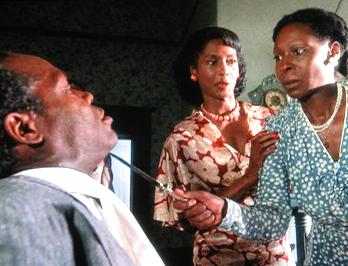 Character deconstruction for the protagonist: The main character Celie, who is a dynamic character, describes her life and the novel depicts her change of character as the story progresses. |
||||


